
Which Office Character Are You?
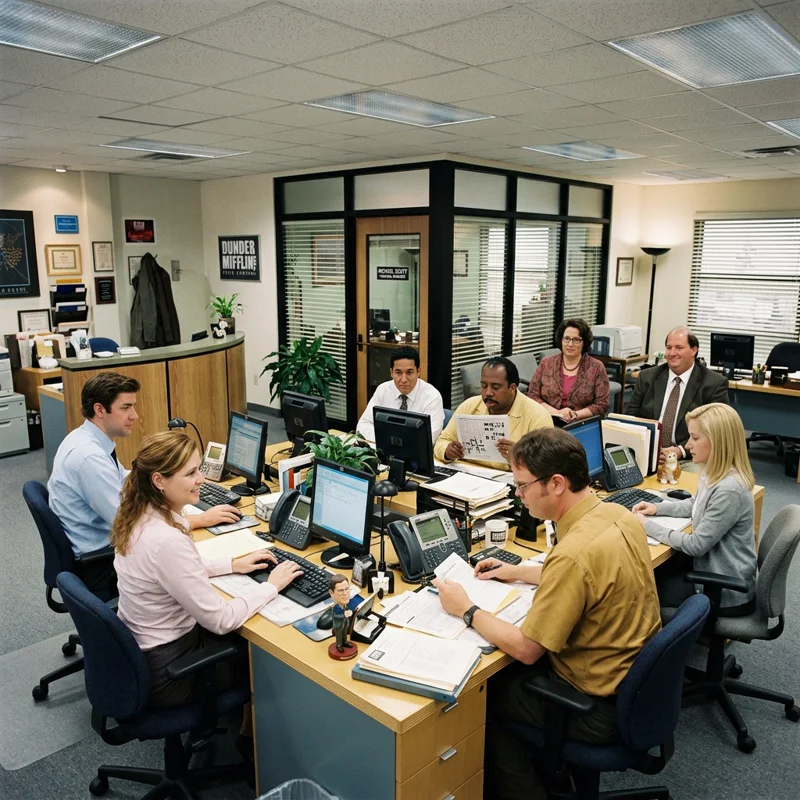
The Office gave us one of the most psychologically distinct casts in sitcom history - a collection of real, flawed, funny humans trapped in a Scranton paper company.
Whether you lead with cringe, competence, wit, creativity, anxiety, or pop culture knowledge, one of these characters is unmistakably you.
Answer these 10 questions to find out which Dunder Mifflin employee you really are.
Key Takeaways
- •The Office aired from 2005 to 2013 and remains one of the most-watched shows on streaming, with over 57 billion minutes streamed on Netflix in 2020 alone.
- •Michael Scott's character is based on the British original David Brent, but Steve Carell humanized him significantly - making him more pathetic than cruel.
- •Dwight Schrute is partly modeled on the 'true believer' archetype - someone whose commitment to his worldview is both his greatest strength and his greatest liability.
- •Pam Beesly's character arc is one of the most quietly compelling in the series: she begins as someone trapped by others' expectations and ends having built the life she actually wanted.
- •Jim Halpert's pranks on Dwight became cultural shorthand for passive resistance to workplace absurdity.
What Workplace Psychology Says About The Office's Characters
The Office works as satire because its characters map onto archetypes documented in real organizational behavior research. Michael Scott exhibits what leadership scholars call pseudo-transformational leadership - invoking inspiration, family, and loyalty while being operationally unreliable. Dwight represents the high-conscientiousness, low-agreeableness profile common in organizations that reward rule-following over judgment. Jim is the textbook high-potential low-performer: abilities that exceed engagement, coasting on charm rather than commitment. Pam's early arc illustrates identity foreclosure - remaining in a situation not from preference but from failure to imagine an alternative. The show exaggerates for comedy; the organizational psychology underneath it is accurate enough to sting.
The Six Office Archetypes
Michael Scott: The well-meaning disaster. He wants to be loved, he wants to be the best, and he is catastrophically bad at reading the room. But underneath the cringe is someone who would do anything for the people he considers family - and who occasionally has a moment of genuine grace.
Dwight Schrute: The true believer. Intensely committed, rigidly principled, and operating from a worldview shared by almost no one else. He's annoying, he's ridiculous, and he is absolutely the person you want in a crisis.
Jim Halpert: The witty observer. Smart, charming, and gifted at getting through his day with the minimum of effort while making everyone around him laugh. He's also capable of growth when life forces the issue.
Pam Beesly: The quiet grower. She starts out apologizing for existing and ends up knowing exactly who she is and what she wants. Her story is about finding your voice - slowly, and then all at once.
Andy Bernard: The anxious achiever. He needs external validation like most people need oxygen. He's enthusiastic, fragile, and deeply well-meaning - he just needs everyone to know it.
Kelly Kapoor: The pop culture force of nature. Relentlessly confident in her opinions, exhaustingly social, and always the center of something. She's never boring.
Frequently Asked Questions
Which Office character is the most popular? Dwight Schrute and Jim Halpert consistently rank as the most beloved characters in audience polls, with Dwight winning for comedic memorability and Jim for relatability. Pam's arc is frequently cited by fans as the most emotionally resonant.
Is there an official Which Office Character Are You quiz? The show's official social accounts have run character quizzes over the years, but none are still active. This quiz is one of the most detailed personality-based Office character matches available.
What personality type is Michael Scott? Michael Scott most closely resembles an ENFJ (the 'Protagonist') type - extraverted, emotionally intuitive, and desperate for human connection - but his lack of self-awareness and poor boundary-setting make him a deeply distorted version of the type.
Comments
Leave a comment