
Which Season Are You?
Seasonal Affective Disorder - a mood disorder triggered by reduced light in autumn and winter - was formally identified by Norman Rosenthal and colleagues at the National Institute of Mental Health in 1984. It now affects an estimated 5% of US adults, with a milder form called subsyndromal SAD (sometimes just 'the winter blues') affecting another 10–20%. For a long time, this was the primary scientific lens through which seasons and personality were connected.
The broader picture is more interesting. Research in environmental psychology consistently finds that light exposure, temperature, and seasonal context measurably shift social behavior, energy levels, cognitive performance, and emotional tone in people who don't meet any clinical threshold. Your inner state genuinely varies with the season - even if you've never thought about it that way.
Carl Jung mapped seasons onto psychological archetypes decades before this was quantifiable: spring as emergence, summer as fullness, autumn as harvest and reflection, winter as dormancy and the unconscious. Modern personality research has found modest but consistent correlations - people who identify most strongly with autumn and winter tend to score higher on openness to experience and introversion; spring and summer identifiers lean toward extraversion and agreeableness. The metaphor is doing real descriptive work.
Answer these 10 questions to find out which season you actually are.
Key Takeaways
- •Research on seasonal mood effects (including Seasonal Affective Disorder) shows that light, temperature, and seasonal cues have measurable impacts on personality expression and energy levels.
- •The concept of 'color seasons' in personal styling maps skin tone and undertone to one of four season palettes - a system still widely used by image consultants.
- •People's stated seasonal preferences correlate modestly with Big Five personality traits: agreeableness and openness tend toward spring/summer; conscientiousness toward autumn; introversion toward winter.
- •Autumn consistently ranks as the most aesthetically popular season in Western cultures, with the highest social media engagement around seasonal imagery.
- •Carl Jung associated seasons with archetypal psychological cycles: spring with emergence, summer with fullness, autumn with harvest and reflection, and winter with dormancy and the unconscious.
Seasons as Personality Archetypes
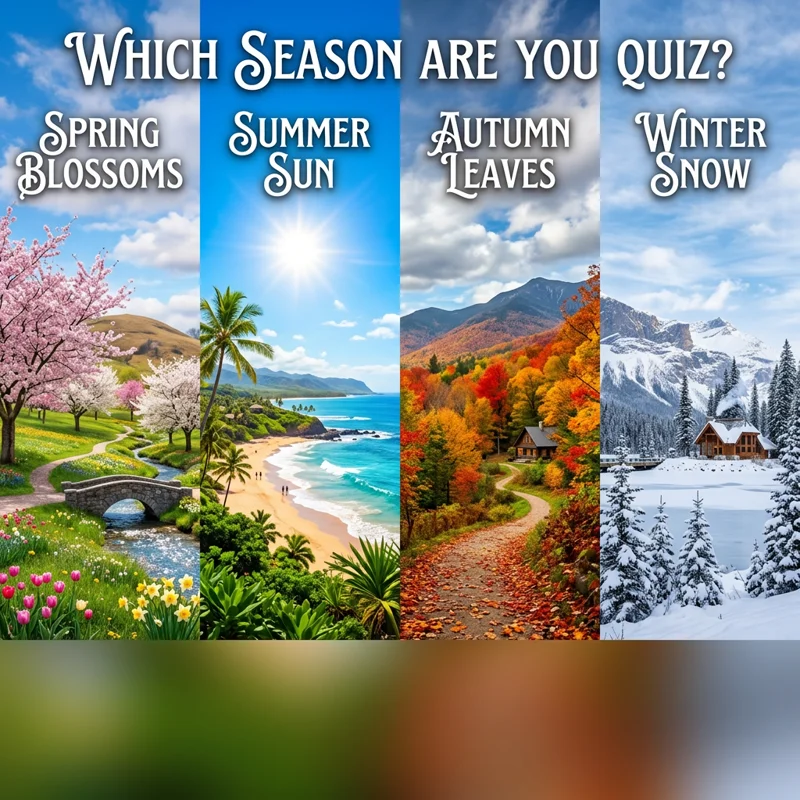
Every season carries an emotional and aesthetic personality. Spring is renewal, hope, and the courage to begin again. Summer is vibrancy, presence, and unapologetic warmth. Autumn is depth, transformation, and the beauty of things passing. Winter is stillness, clarity, and the power of what's underneath the surface. These aren't just metaphors - they're genuine psychological orientations toward life that people feel strongly about.
What Your Season Says About You
Spring: You're optimistic, energetic, and always ready for a new beginning. You find possibility in change and thrive when things are growing.
Summer: You're bold, social, and fully present. You bring energy to every room and make the most of every moment.
Autumn: You're thoughtful, creative, and drawn to depth and meaning. You find beauty in transition and complexity in simplicity.
Winter: You're introspective, calm, and quietly powerful. You value solitude, clarity, and the kind of depth that only comes with stillness.
Frequently Asked Questions
What does it mean if you're an Autumn person? Autumn personalities tend to be introspective, creatively oriented, and drawn to depth and meaning. Research on seasonal preference suggests Autumn lovers often score higher on openness to experience and tend toward richer inner lives. They find beauty in transition and complexity in situations others find simple.
Is there a scientific basis for seasonal personalities? There is genuine science behind seasonal effects on personality and mood. Seasonal Affective Disorder (SAD) affects approximately 5% of adults in the US and correlates with reduced light and temperature changes. Separately, research in urban psychology and environmental personality studies shows that people's energy, social behavior, and emotional expression measurably shift across seasons.
What season are most people? In Western social media surveys and personality studies, Autumn consistently attracts the largest self-identified group, followed by Winter. Summer and Spring personalities are somewhat less common as self-identifications, though preference varies by geographic location and climate familiarity.
Comments
Leave a comment