
Which Game of Thrones House Are You?
George R.R. Martin has described the Wars of the Roses - the 15th-century English civil war between the Houses of York (white rose) and Lancaster (red rose) - as a primary historical inspiration for Westeros. The parallels are deliberate: disputed succession, noble houses with competing dynastic claims, shifting alliances, and the systematic punishment of moral uprightness. Martin took the historical framework and made it grimmer, removing the assurance that the good guys eventually prevail.
A Song of Ice and Fire began with the first novel in 1996. When HBO adapted it in 2011, Game of Thrones became one of the highest-rated cable dramas in television history, peaking at 19.3 million viewers for the Season 7 finale. One small piece of Westerosi trivia: the Lannister line 'A Lannister always pays his debts' never appears in the books as the official house words - the real motto is 'Hear Me Roar.' The debt line became better known because it captured something truer about the family than their official motto did.
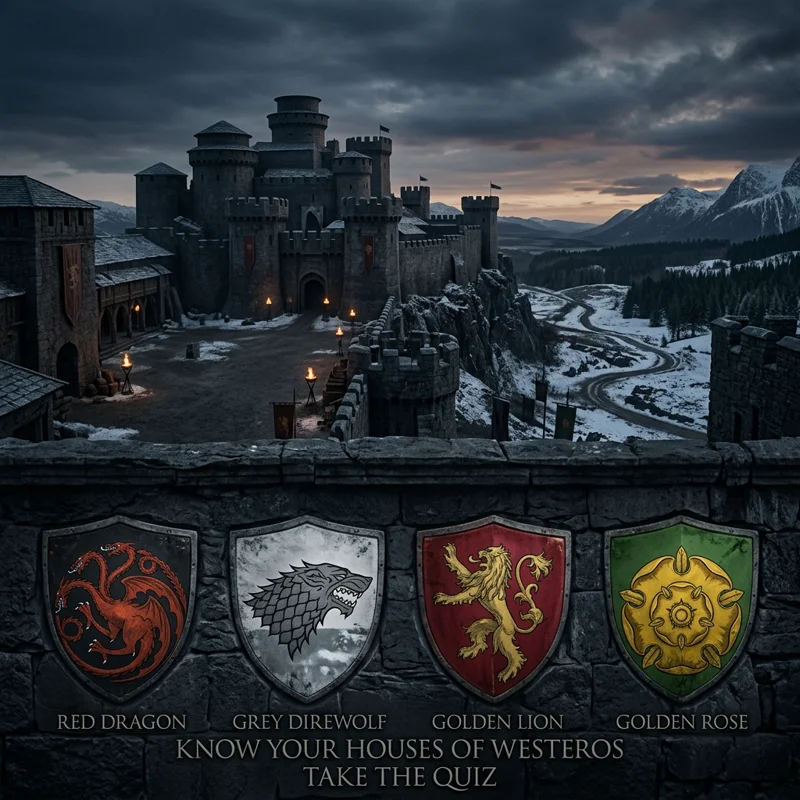
Each of the five great houses represents a distinct theory of power. The Starks believe in honor. The Lannisters believe in reputation. The Targaryens believe in destiny. The Baratheons believe in strength. The Tyrells believe in influence. Martin's insight - delivered through eight seasons of consequences - is that no single theory is sufficient. The world will eventually find and destroy your strategy. What remains is character.
Answer these 10 questions to find out which House of Westeros claims you.
Key Takeaways
- •George R.R. Martin has cited the Wars of the Roses - the 15th-century English civil war between the Houses of York (white rose) and Lancaster (red rose) - as a primary inspiration for Westeros.
- •House Stark's motto 'Winter is Coming' is deliberately anti-triumphalist - it's a warning, not a boast. Martin designed it to contrast with the self-aggrandizing mottos of southern houses.
- •The Lannister motto 'A Lannister Always Pays His Debts' is not the official house words - the official motto is 'Hear Me Roar.' The debt line became more famous because it better captured the house's ethos.
- •Daenerys Targaryen's arc is one of the most discussed in contemporary fiction - a meditation on the seductiveness of power and the corrupting distance between intention and action.
- •The Red Viper's famous statement 'The powerful have always preyed upon the powerless - that's how they became powerful' is one of the most-quoted lines from the series.
The Five Houses and Their Philosophies
House Stark: Honor above all. The Starks believe in duty, loyalty, family, and the old gods. They're the moral center of Westeros - which in Martin's world means they suffer most. Honest, principled, and occasionally naïve about how dangerous the world really is.
House Lannister: Power and reputation above all. The Lannisters believe that perception is reality and that debts - of money and loyalty - must always be repaid. They're cunning, ambitious, and capable of genuine love within the family, even when they destroy everything outside it.
House Targaryen: Legacy and destiny above all. The Targaryens believe they have a divine claim to rule, backed by dragons. They're capable of extraordinary vision and extraordinary cruelty. Their madness and their greatness come from the same source.
House Baratheon: Strength and loyalty above all. The Baratheons won the throne by force and hold it with force. They value directness, fealty, and the authority earned by being stronger than everyone else.
House Tyrell: Influence and grace above all. The Tyrells understand that power doesn't always require armor - it can wear a smile. They're sophisticated, patient, and entirely willing to plant the knife while you're admiring the roses.
What Your House Reveals About How You Exercise Power
Martin's genius is that each house represents a legitimate - and ultimately flawed - theory of power. The Starks' honor-based model is admirable and politically fatal; the world punishes honesty. The Lannisters' transactional model sustains power but destroys love; they buy loyalty they can't keep. The Targaryens' destiny-based model produces great conquerors and great tyrants depending on the individual; belief in destiny is both fire and hubris. The Baratheons' strength-based model wins thrones but can't hold them; force establishes rule, it doesn't justify it. The Tyrells' influence-based model is arguably the most sophisticated - they understand that power is relational, not merely structural. Their weakness is that relationships built on strategy are fragile when strategy is exposed.
Frequently Asked Questions
Which Game of Thrones house is most popular? House Stark is consistently the most popular house among fans, due to their moral clarity and the emotional investment viewers built in the Stark family across the series. House Targaryen gained popularity sharply during Daenerys' rise, and House Lannister is admired for its complexity.
What is the difference between House Stark and House Lannister as personality types? Starks lead with loyalty and internal moral code - they do what they believe is right regardless of consequences. Lannisters lead with strategy and reputation - they do what advances the family's position. In personality terms, Starks tend toward high conscientiousness and integrity; Lannisters toward high Machiavellianism and long-term strategic thinking.
Which Game of Thrones house is the strongest militarily? At their peak, House Lannister commands the wealthiest armies in Westeros. House Targaryen's military strength historically derived from dragons, which no other house could match. House Stark controls the largest landmass in Westeros but relies on loyalty rather than professional standing armies.
Comments
Leave a comment