
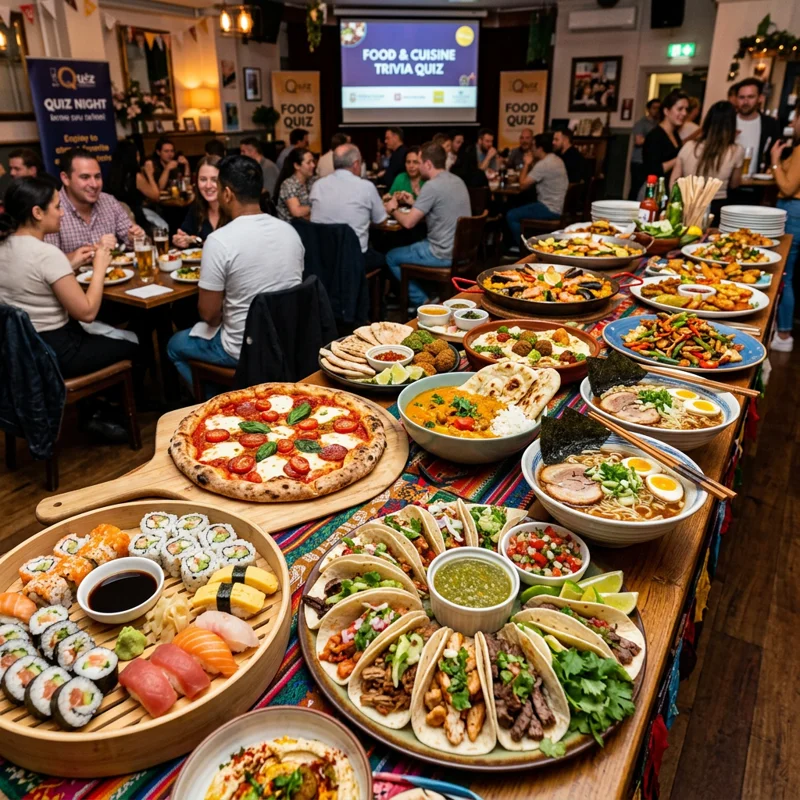
Food & Cuisine Trivia Quiz
French fries are not French - they are almost certainly Belgian, documented in the Meuse Valley region by the late 17th century. American soldiers stationed in Belgium during World War I heard French spoken around them and called the local fried potatoes 'French fries.' The name stuck. Croissants are Austrian, not French, descending from the kipferl and brought to Paris by Viennese baker August Zang around 1839. Caesar salad was invented in Tijuana, Mexico in 1924 by Italian immigrant Caesar Cardini - not in Italy, not in France, not in the United States.
Food origin myths persist because cuisine travels invisibly. Dishes move with migration, trade, and conquest, losing their paper trail. Tomatoes - now considered the foundation of Italian cuisine - were not widely accepted in European cooking until the 18th century, because most Europeans believed they were poisonous. Chili peppers, central to Thai, Indian, Korean, and Chinese cuisines, are all native to the Americas and arrived in Asia only after Columbus.
The world's most expensive spice by weight is saffron, which requires roughly 150,000 flowers to produce one kilogram and retails for up to $10,000 per kg. France and Japan are the only national culinary traditions formally recognized as UNESCO Intangible Cultural Heritages - France in 2010, Japan in 2013.
This quiz covers 12 questions across food origins, ingredients, dishes, and culinary history from around the world. The trickiest questions involve the gap between culinary mythology and documented historical record.
Key Takeaways
- •Sushi originated not in Japan but in Southeast Asia as a method of fermenting fish in rice - the rice was originally discarded. The Japanese version evolved significantly in the Edo period.
- •Chocolate was consumed as a bitter, spiced drink by the Maya and Aztec civilizations for over 3,000 years before sugar was added by European colonizers.
- •France's gastronomic tradition was declared an Intangible Cultural Heritage of Humanity by UNESCO in 2010 - the first national cuisine to receive this recognition.
- •The world's most expensive spice by weight is saffron, which requires 150,000 flowers to produce one kilogram and retails for up to $10,000 per kg.
- •Pizza was traditionally a simple flatbread food of the poor in Naples, Italy. The modern tomato-based version emerged in the 18th century after tomatoes from the Americas became accepted in European cooking.
Three Foods You Think Are French - That Aren't
French fries are almost certainly Belgian. Croissants are Austrian. Caesar salad was invented in Tijuana, Mexico in 1924. The foods most strongly identified with one national cuisine are often from somewhere else entirely - because food travels with people, and the paper trail disappears. Chili peppers, now central to Thai, Indian, Korean, and Chinese cuisines, are native to the Americas. The Silk Road explains why Central Asian dishes share features with both Eastern European and Chinese cooking. Food is history you can taste - but the history is rarely where you expect.
The Surprising Origins of Everyday Foods
Chocolate was consumed as a bitter, spiced liquid by the Aztec and Maya for at least 3,000 years before Europeans encountered it. The solid, sweetened chocolate bar wasn't invented until 1847 by Joseph Fry in England. The version most of us eat today would be unrecognizable to the civilization that first cultivated cacao.
Pizza is now considered quintessentially Italian, but the modern pizza - with tomato sauce - didn't become widespread until the late 1800s, because tomatoes (brought from the Americas) were believed by many Europeans to be poisonous until the 18th century. The Naples margherita pizza as we know it dates to around 1889.
French fries are almost certainly Belgian, not French. The dish of potato strips fried in oil is documented in Belgium in the 17th century. American soldiers stationed in Belgium during World War I encountered them and, hearing French spoken around them, called them 'French fries.' The name stuck.
Sushi originated as a fermented fish preservation method in Southeast Asia - not as the fresh, vinegared rice dish we know today. The fermentation process took months and the fish was eaten while the rice was discarded. The rice-vinegar version (and the concept of eating it fresh) developed in Japan over centuries.
Frequently Asked Questions
What country has the best cuisine in the world? Cuisine ranking is subjective, but France, Japan, Italy, Mexico, China, India, and Thailand consistently top global food surveys and culinary rankings. France and Japan hold the most Michelin stars collectively. Mexican and Japanese cuisines are both UNESCO-recognized Intangible Cultural Heritages.
What is the most eaten food in the world? Rice is the most consumed staple food globally, feeding more than half the world's population as their primary carbohydrate source. Wheat is second. Potatoes, corn (maize), and cassava round out the top five global staples.
What are the hardest food trivia questions? The trickiest food trivia involves origin myths versus true history: the birthplace of french fries (Belgium, not France), the actual origin of Caesar salad (Tijuana, Mexico in 1924), and the fact that fortune cookies were invented in San Francisco, not China, in the early 1900s.
Comments
Leave a comment