
Which Friends Character Are You?
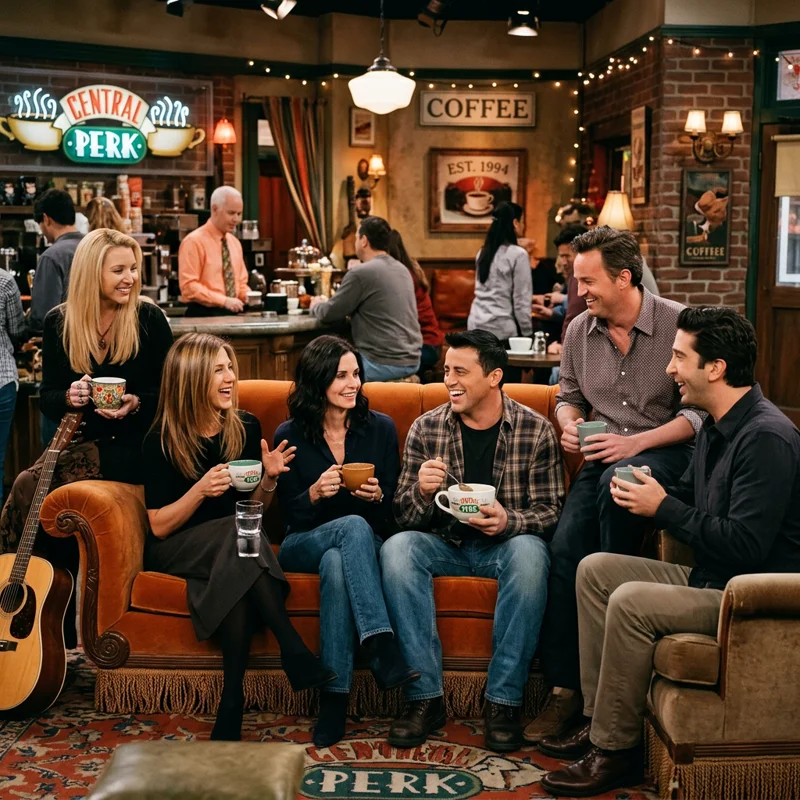
Friends ran for ten seasons, introduced six of the most beloved characters in TV history, and created a cultural shorthand that people still use thirty years later.
Whether you're the paleontologist who's been divorced three times, the one who cooks for stress, or the one who can't keep a secret, one of these six is unmistakably you.
Answer these 12 questions honestly to find out which Friend you really are.
Key Takeaways
- •Friends aired from 1994 to 2004 and remains one of the highest-rated sitcoms of all time, with an estimated 100 million viewers in its finale.
- •The six main characters were deliberately written with distinct comedic and emotional archetypes that audiences could identify with across different personality types.
- •Chandler Bing's use of humor as a defense mechanism and Ross Geller's pedantry are two of the most psychologically consistent character traits in sitcom history.
- •Phoebe Buffay's backstory - orphaned, homeless as a teenager - makes her canonically the most resilient character on the show, a fact often overlooked by casual viewers.
- •Joey Tribbiani's combination of low self-awareness and genuine warmth is a personality profile that scores high on agreeableness and low on conscientiousness in Big Five terms.
Why These Six Characters Became Cultural Shorthand
Friends aired from 1994 to 2004 but has never stopped being watched. In 2020 alone - before leaving Netflix US - the show accumulated over 100 billion streaming minutes on the platform. The reason isn't comfort viewing alone. The writing team gave each character a specific wound and a specific gift: Ross's sincere enthusiasm paired with encyclopedic knowledge, Rachel's arc from dependency to hard-won ambition, Monica's competitive drive as a form of love, Chandler's humor as emotional armor over genuine warmth, Joey's uncomplicated generosity, Phoebe's resilience disguised as eccentricity. That combination - universal archetype plus specific wound - is why every generation finds a character they recognize themselves in.
The Six Archetypes of Friends
Ross Geller is the intellectual - knowledgeable, passionate about his work, prone to over-explaining, and chronically unlucky in love despite being a romantic at heart. He cares deeply but struggles to translate that care into smooth social execution.
Rachel Green is the ambitious underdog - someone who grew up with everything and had to rediscover herself from scratch, ultimately becoming more driven, self-aware, and capable than anyone expected.
Monica Geller is the achiever - hyper-organized, competitive, and nurturing. She shows love through action (usually cooking) and holds herself and others to a high standard. She thrives when she's in charge.
Chandler Bing is the deflector - brilliant, sarcastic, and emotionally avoidant until he isn't. His humor is a shield, but underneath is a deeply loyal, loving person who took a long time to let people in.
Joey Tribbiani is the warm heart - uncomplicated, generous, and the kind of friend who would give you his last sandwich if you looked hungry (which is saying something). Not book-smart, but emotionally present in a way others aren't.
Phoebe Buffay is the free spirit - unshakably herself, creative, spiritual, and wildly unconventional. She's the one who doesn't follow the social script, and somehow that makes her the most authentic person in the group.
Frequently Asked Questions
Which Friends character is most like me based on personality? The most accurate way to match yourself to a Friends character is to look at your core motivation: Ross is driven by wanting to be taken seriously; Rachel by wanting to build a self she's proud of; Monica by wanting to achieve and be the best; Chandler by wanting to be loved while protecting himself with humor; Joey by wanting connection and warmth; Phoebe by wanting to be fully, authentically herself. Which of those resonates most?
What personality type is Chandler Bing? Chandler Bing consistently maps to ENTP or INTP personality profiles - quick-witted, analytical, and socially capable but fundamentally private. His humor-as-defense-mechanism is classic avoidant attachment expressed through comedy rather than withdrawal.
Why is Friends still so popular in streaming? Friends averages hundreds of millions of streaming minutes annually despite ending in 2004. Researchers point to its 'parasocial comfort' effect - watching familiar characters in a predictable, safe environment reduces stress. Its consistent availability on major platforms has introduced it to new generations who weren't born when it aired.
Comments
Leave a comment